Icko Iben Jr. Distinguished Lecture Series in Astronomy

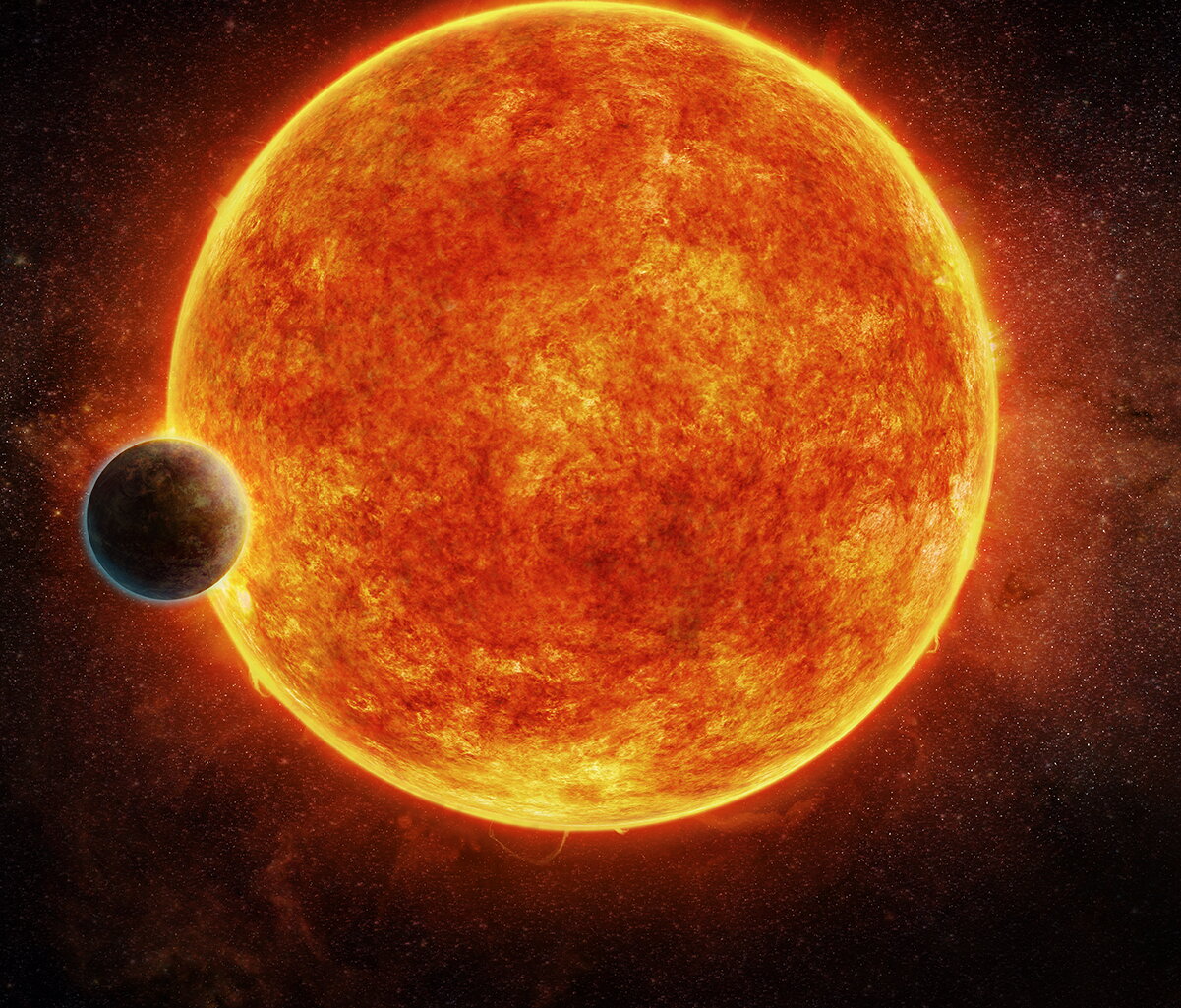
Credit M. Weiss/CfA

The Terrestrial Worlds of Other Stars

Rocky worlds that are similar in temperature and composition to the Earth have recently been discovered to orbit nearby stars. The big question is: Are these truly Earth-like orbs, or are they airless worlds inhospitable to life? Using the powerful NASA James Webb Space Telescope, astronomers are now getting their first sniffs of the conditions on some of these planets. In the not-too-distant future, the Habitable Worlds Observatory should definitively answer the grand question of whether or not we are alone in the Universe.
About Our Speaker

Image
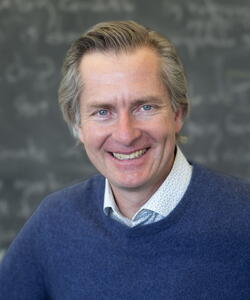
David Charbonneau.

David Charbonneau is the Fred Kavli Professor of Astrophysics and the Chair of Astronomy at Harvard University. He enjoys working with students and postdoctoral fellows to develop novel methods and instruments for the characterization of planets orbiting other stars, and studies how the life cycles of the parent stars affect the properties of their atmospheres. Dr. Charbonneau has pioneered many of the methods that are now widely used to discover and study these worlds, including the first exoplanet transit, the first detection of an exoplanet atmosphere, and the first estimate of the number of habitable worlds in the galaxy. He recently co-chaired the National Academies study, commissioned by Congress, that describes our national strategy for exoplanet research, including the search for life in the Universe. He is a member of the National Academy of Sciences and the American Academy of Arts and Sciences. In September 2024, he was awarded the Kavli Prize in Astrophysics from the King of Norway at a ceremony in Oslo.

Title
About the Iben Lecture Series

Founded in 1997 and named in honor of Distinguished Professor Emeritus Icko Iben Jr., the Icko Iben Jr. Distinguished Lecture Series brings a noted astronomer to campus to highlight some of the latest developments in astronomy in a forum geared for the general public.

Past Iben Lectures:

  • Fall 2025: "Cosmic Gold: Neutron Star Collisions, Gravitational Waves, and the Origin of the Elements," Eliot Quataert is a Professor of Astrophysical Sciences and the Charles A. Young Professor of Astronomy at Princeton University.
  • Spring 2025: "Cosmic Alchemy and the Universe in Us," Professor Enrico Ramirez-Ruiz. Vera Rubin Chair of Astrophysics and Astronomy, UC-Santa Cruz. President of the Astronomical Society of the Pacific.
  • Spring 2024: "Signals from the Beginning of the Universe", Professor Jo Dunkley. Joseph Henry Professor of Physics and Astrophysical Sciences, Princeton University.
  • Fall 2023: "JWST: 25 Years to Build, One Year to Change Astronomy", Professor Marcia J. Rieke. Regents' Professor of Astronomy, Astronomer and Elizabeth Roemer Endowed Chair, Steward Observatory, University of Arizona
  • Fall 2021: "Einstein’s Waves: Cosmic Sounds from Black Holes and Neutron Stars", Professor Vicky Kalogera, Daniel I. Linzer Distinguished University Professor
    Department of Physics and Astronomy, Director of CIERA, Northwestern
  • Fall 2018: "The Universe Continues to Reveal Surprises", Dr. Wendy Freedman, John and Marion Sullivan University Professor in Astronomy and Astrophysics at the University of Chicago
  • Spring 2018:  "Exoplanets & The Search For Habitable Worlds," Dr. Sara Seager, Professor of Planetary Science, Physics, and Aerospace Engineering at the Massachusetts Institute of Technology
  • Spring 2015:  "What Scientists Know About The Big Bang,"  Dr. John E. Carlstrom, Subramanyan Chandrasekhar Professor of Astronomy, Astrophysics and Physics at the University of Chicago, and deputy director of the Kavli Institute for Cosmological Physics.
  • Fall 2012: "The Galactic Center: Unveiling the Heart of our Galaxy," Andrea Ghez, University of California, Los Angeles
  • Fall 2010: "Exploring the Dark Side of the Universe," Tony Tyson, University of California, Davis
  • Spring 2009: "Dark Energy and the Runaway Universe", Alex Filippenko, University of California, Berkeley
  • Fall 2008: "The World According to the Hubble Space Telescope", Mario Livio, STScI
  • Spring 2006: "The Mars Exploration Rover Mission", Steven W. Squyres, Cornell University
  • Fall 2004: "Massive Black Holes, or Gravity Strikes Back", Reinhard Genzel, Max-Planck Institute for Extraterrestrial Physics & University of California, Berkeley
  • Fall 2003: "Cosmic Collisions: How Astronomers are Saving the World", David Morrison, NASA Ames Research Center
  • Fall 2002: "The Search for Extraterrestrial Intelligence", William J. Welch, University of California, Berkeley
  • Spring 2002: "Large Optical Telescopes: The Next Generation", W.L.W. Sargent, California Institute of Technology
  • Fall 2000: "Are We Alone?", Steven Beckwith, Space Telescope Science Institute
  • Fall 1999: "The Universe: Big, Old, Accelerating?", Robert P. Kirshner, Harvard University
  • fall 1997: "Binary Pulsars and Einstein's Gravity", Joseph H. Taylor, Princeton University