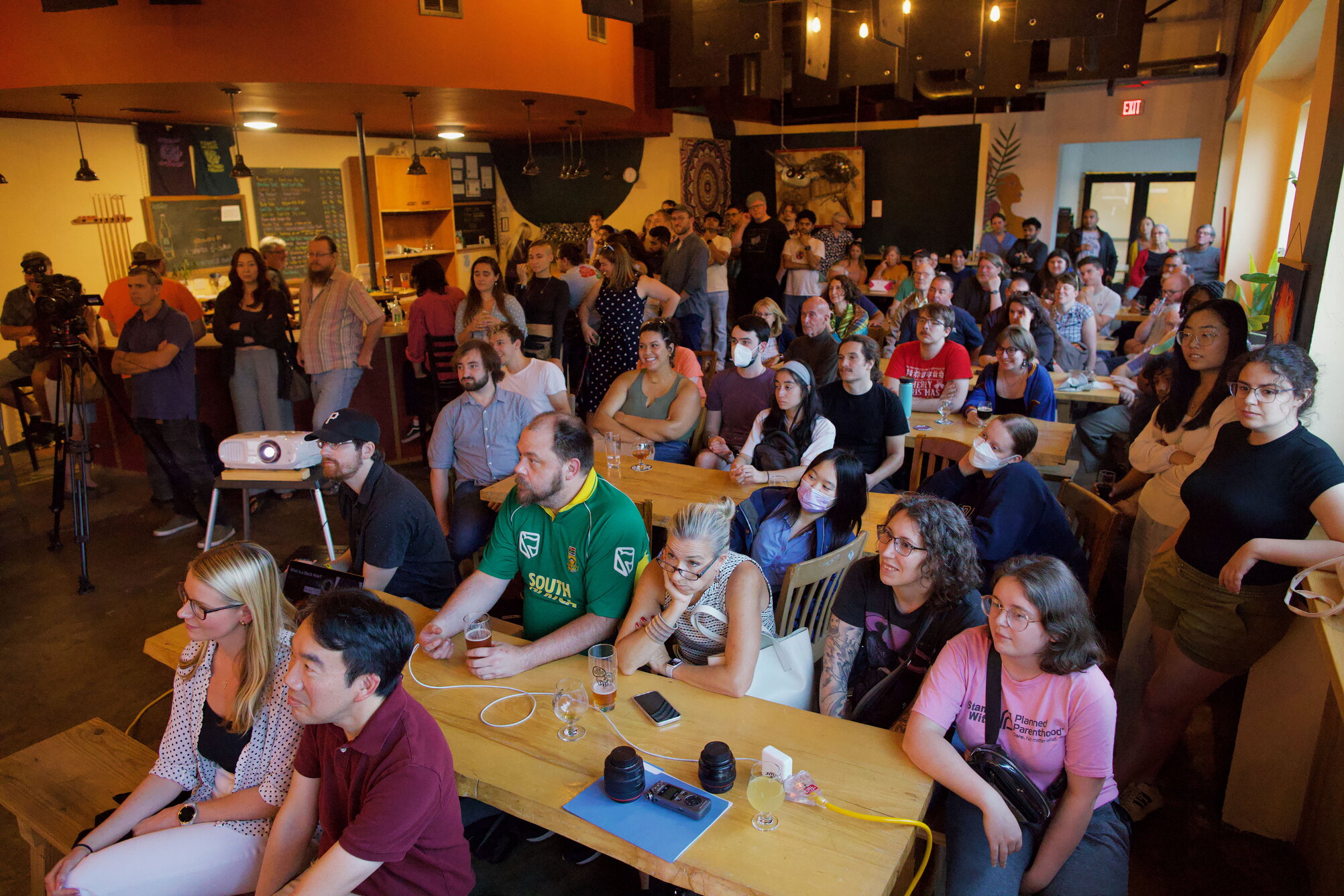
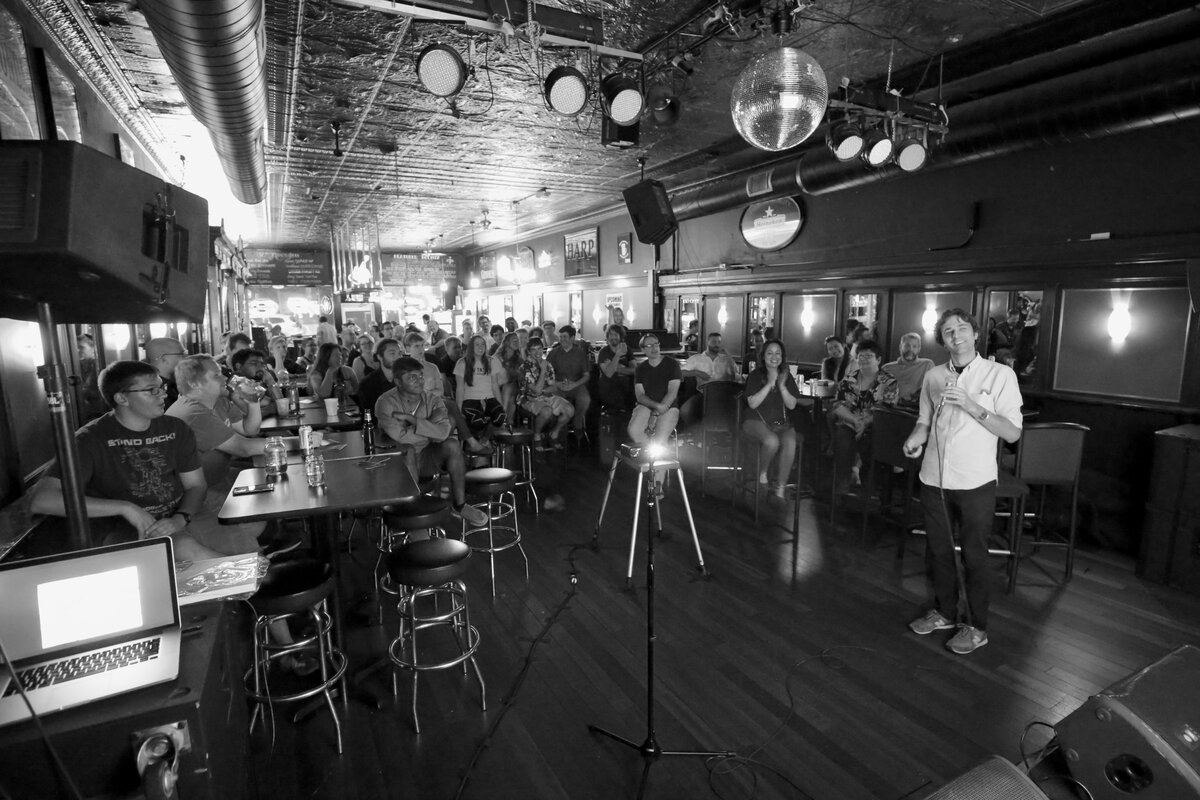
Science shouldn’t feel distant. It shouldn’t feel reserved for textbooks, TV screens, or “other people.”
“You have to meet people where they are,” says astronomy professor Joaquin Vieira. “Otherwise, what’s the point?”
As Astronomy on Tap at Illinois turns 10, it has brought cutting-edge research out of the classroom and into a brewery — creating space for curiosity, questions, and connection.
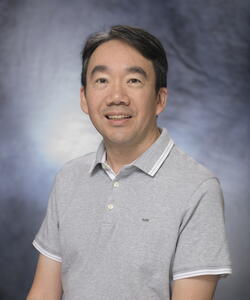
Itʼs been a privilege to lead the Astronomy Department over the past three years and work with colleagues across the department, college, and campus to advance our collective goals. Weʼve faced many challenges, particularly uncertainty surrounding federal research funding and immigration policies, which continues to affect our research, education, and outreach. Although worst-case scenarios have been avoided for now, we must remain vigilant against ongoing threats to the scientific enterprise and remind our leaders of the value the University of Illinois provides to the state and the nation. We are grateful for the support of friends and donors who have stepped up at times of maximum uncertainty to support our students.
Highlights from my time as chair include recruiting two junior faculty members in exoplanet science (Jiayin Dong and Michael Zhang), an eclipse-watching event in April 2024, and long-deserved advising and teaching awards for several of our faculty. Our department has also been enhanced by support from the College of LAS for hiring a Communications Coordinator and an Academic Advisor, and for bringing our faculty salaries closer to market rates.
We also made substantial progress rehabilitating our Campus Observatory and placing our Astrophysics major on a more sustainable footing by developing and sharing resources with the Physics Department.
We introduced several new courses for majors and non-majors and began a much-needed overhaul of our introductory online astronomy course. None of these efforts would have been possible without department members, the Friends of the Observatory, and colleagues across the Illinois campus.
Despite ongoing challenges, the Astronomy Department continues to thrive with strong student enrollment (over 250 majors, a record high!), highly visible research initiatives such as SkAI, NEXUS, SCiMMA, and DeepDISC-Euclid, first light for the Rubin Observatory, and healthy attendance at regular events such as the Journal Club, Colloquium, and Social Snack Hour. You’ll learn more in this issue of our newsletter. As I hand responsibilities to Paul, I wish him success in fostering new opportunities for collaboration and growth as we enter this AI-assisted (at least, that’s the optimistic view!) new era in science and education.
Best wishes,
TONY WONG, Professor and outgoing department chair
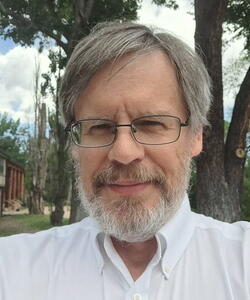
This is a challenging time for astronomy and for science in general. Federal research support has become volatile, and private funding is becoming more important. Society is witnessing declining confidence in scientific organizations and scientific truth. However, we are a creative and energetic department, and I am confident we will continue to thrive. We continue to attract more undergraduate majors and educate outstanding graduate students and postdocs. Our faculty continue to produce award-winning research and teaching. We are scrappy and innovative, and we keep our attention on what is important.
This summer, three of our graduate students (Maggie Verrico, Zachary Stone, and Padma Venkatraman) successfully won Cycle 1 funding to use the Nancy Grace Roman Space Telescope. Roman, launching later this summer, has a Hubble-sized mirror but a field of view 100 times larger. With it, we will be able to identify supermassive black holes in the process of consuming stars, black hole binaries on their way to merging, distant supernovae, and planets around other stars.
We continue to find success with other facilities and initiatives as well. Professor Yue Shen and postdoc Mingyang Zhuang are using the James Webb Space Telescope through 2028 to study supermassive black holes in the early universe. Incoming professor Michael Zhang has obtained JWST time to study the peculiar carbon atmosphere of the planet PSR J2322-2650b. Postdoc Kedar Phadke and graduate student Maggie Verrico have each secured time on the Atacama Large Millimeter Array (ALMA) to study, respectively, the most distant star-forming galaxies and molecular gas in active galaxies. Professors Joaquin Vieira and Gautham Narayan are leading efforts through the NSF- and Heising-Simons-funded SkAI Institute while also playing key roles in the Legacy Survey of Space and Time (LSST), which recently began operations at the Vera C. Rubin Observatory in Chile. This year, professor Decker French was promoted to Associate Professor with tenure and named a Lincoln Excellence for Assistant Professors (LEAP) Scholar.
We also continue to excel in teaching. Professors Leslie Looney and Bryan Dunne received campus recognition for their excellence in teaching (you can learn more about these achievements further down.) As Director of the Campus Observatory, professor Dunne has also overseen an extensive restoration of the Observatory dome and roof, ensuring that this historic resource will continue to inspire future generations of Illini. Professor Shen spearheaded an effort to enhance support for undergraduate research, earning an award from the LAS PURSUE program for the Department.
These accomplishments have all occurred on Prof. Tony Wong’s watch as department chair, and I am thankful for his stewardship. As incoming chair, my job is to help this outstanding department continue its work by spreading the word and creating new opportunities. Pushing back the boundary of our knowledge and developing the capacities of our students as we do it — that is our business; and our country and our world have never needed it more. I look forward to sharing more successes with you.
With appreciation,
PAUL RICKER, Professor and incoming department chair
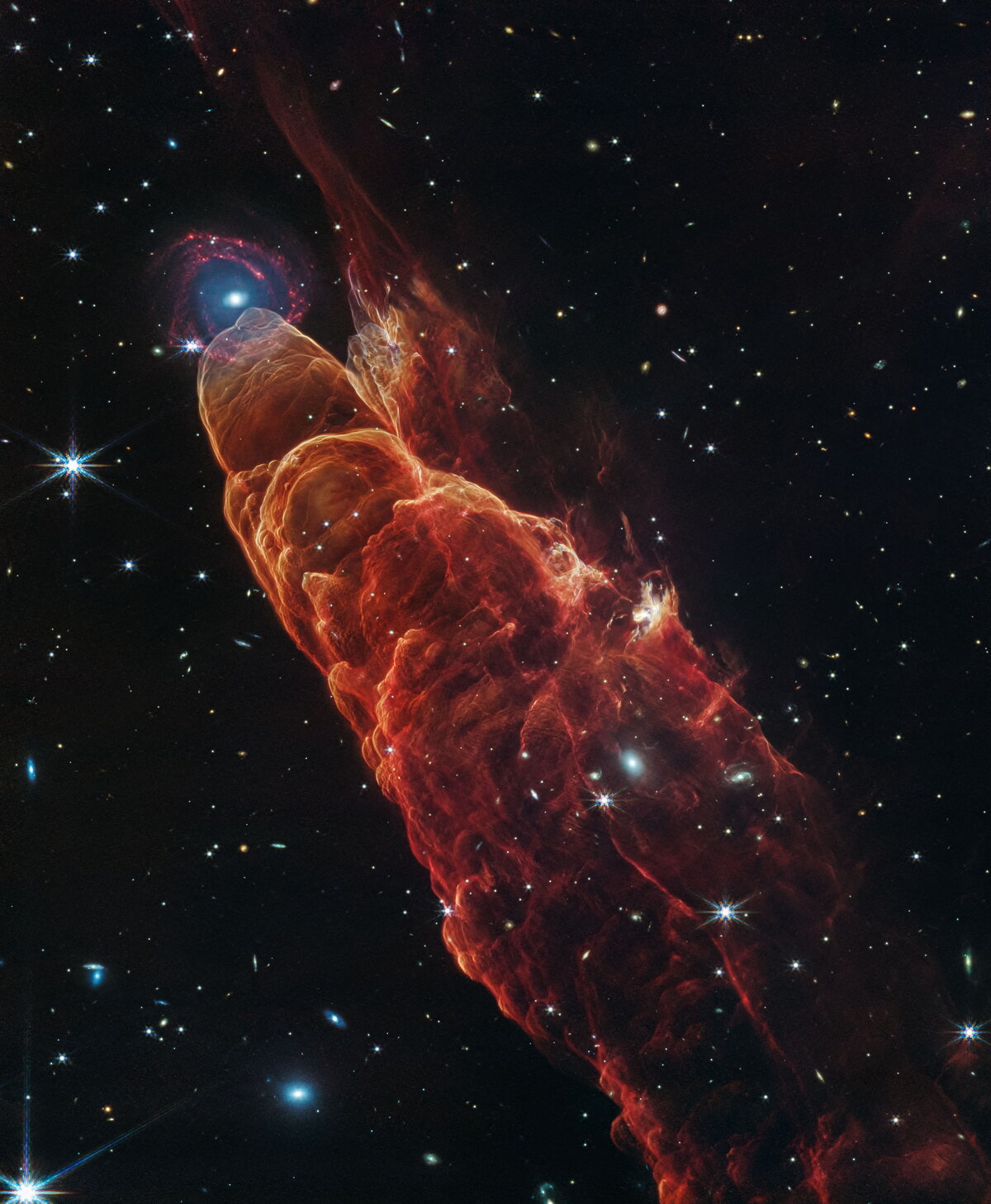
What does it take to understand how the universe came to be — and to help the next generation of scientists find their own path to answering those questions?
Illinois astronomy professor Kirk Barrow studies the formation of the universe’s earliest stars, galaxies, and black holes using massive computational simulations. With the James Webb Space Telescope revealing things scientists never expected to see, his work is helping bridge the gap between what our models predict and what we actually observe.
But Barrow’s work is about more than understanding the cosmos. From teaching himself quantum physics from a textbook he eventually wore out to mentoring students from astronomy and computer science, his curiosity and enthusiasm for learning shape the way he approaches both research and teaching.
What happens when you follow science all the way to its limits?
For Eryn Van Wijk, an undergraduate double-majoring in astrophysics and philosophy, the answer isn’t choosing one field over the other—it’s exploring where they meet. Their academic path blends big questions about the universe with equally profound questions about knowledge, truth, and what it all means.
From studying the cosmos to thinking about the foundations of science itself, Eryn’s journey is a reminder that curiosity doesn’t have to fit into a single discipline—and sometimes, the most interesting discoveries happen in the space between them.

CS+astronomy alum Charlie Young '20 thought his baseball career ended when he left high school, but little did he know that at Illinois, he would learn to apply the fluid dynamics he studied in astronomy to calculate spin rates and launch angles.
Charlie recently talked with the Illinois Alumni Magazine to share how his education in CS+Astronomy helped him prepare for a Major League Front Office.
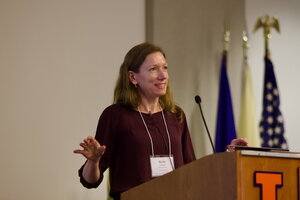
Researchers, students, and faculty came together at AstroFest 2026 to share ideas, showcase research, and explore the many paths in astronomy.
From poster sessions to career conversations, the event highlighted the power of collaboration—and the many directions a future in science can take.
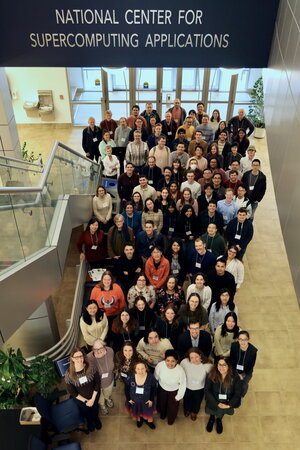
What happens when a galaxy stops making stars? That question brought 92 astronomers from around the world to the National Center for Supercomputing Applications in March 2026 for “The End of Star Formation,” a conference hosted by the Department of Astronomy. Researchers gathered to explore the complex processes that shut down star formation, from supermassive black holes and powerful outflows to supernovae and jets.
With new observations from facilities such as ALMA and the James Webb Space Telescope, alongside increasingly sophisticated cosmological simulations, scientists are gaining new insight into how galaxies evolve—and how their star-forming activity comes to an end. Read more about the conference and the latest discoveries and discussions shaping this rapidly advancing area of astronomy.
Astronomy professor Decker French recently joined the College of Liberal Arts and Sciences' 940 Feet YouTube series.
Join professor French and astrophysics and CS+astronomy student Diego Medina Carlin for a walk on the Quad discussing observations of galaxies and supermassive black holes, the revolutionary science of the Vera C. Rubin Observatory, and how astronomers connect theory with real data to answer some of the universe's biggest questions.
Along the way, Professor French also reflects on her passion for teaching and the joy of watching students grow into confident scientists.
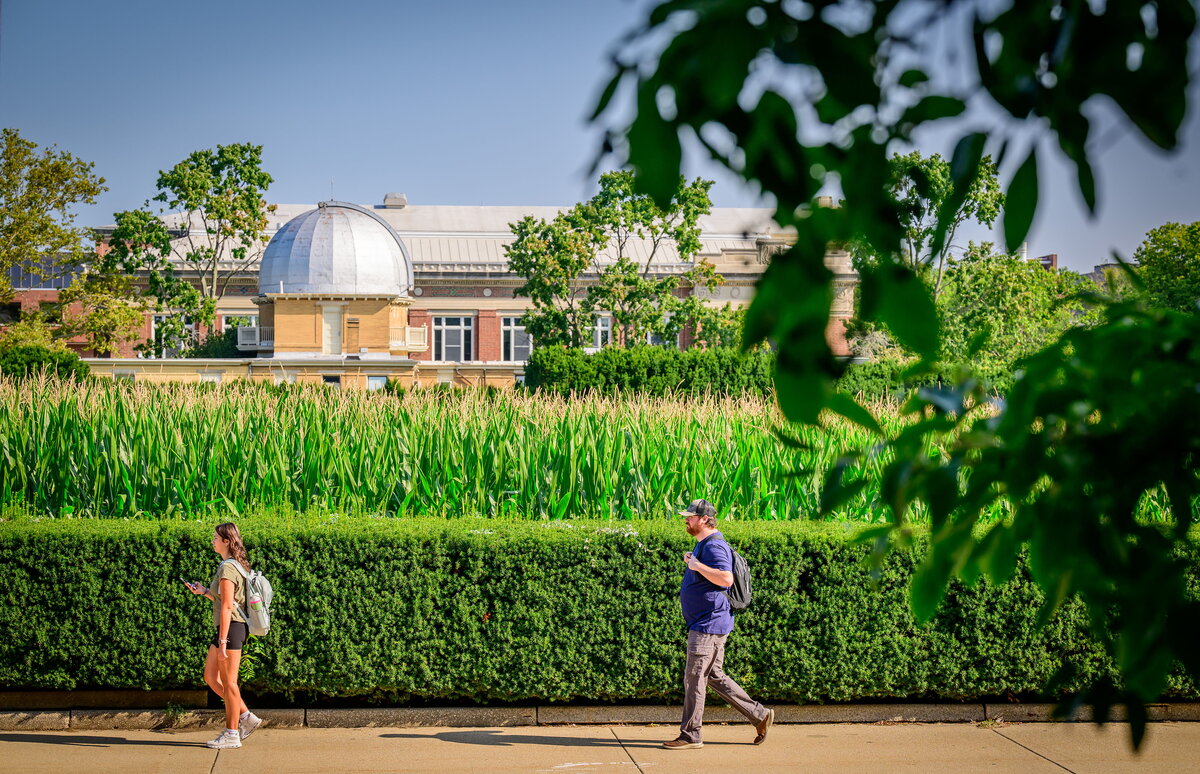
The astronomy department is proud to announce its Spring 2026 Academic Awards. The winners were recognized in an online ceremony, led by Department Chair Tony Wong and Director of Undergraduate Studies Professor Bryan Dunne, and featured remarks from longtime donors, the winning students, and the students' advisors.
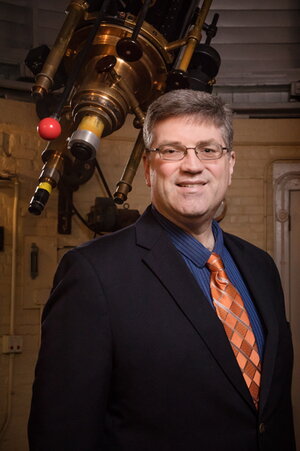
Professor Bryan Dunne was recognized for excellence in undergraduate advising by both the Chancellor's Office and the College of Liberal Arts and Sciences.
Bryan creates clear and supportive pathways for student success across four majors. Through his innovative ASTR 199 course, proactive outreach, and deep commitment to equity, he has strengthened recruitment, retention, and graduate placement. Dunne helps students clarify their goals and collaborates with them to build academic plans that reflect their aspirations.
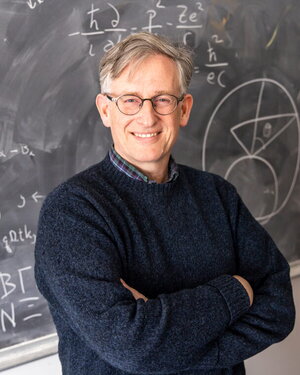
Professor Charles Gammie was named a 2025 Fellow of the American Association for the Advancement of Science, the world’s largest general scientific society. He was honored “for distinguished contributions to theoretical astrophysics, particularly for advancing the understanding of black hole accretion and magnetohydrodynamics, and for leadership in interpreting Event Horizon Telescope observations.”
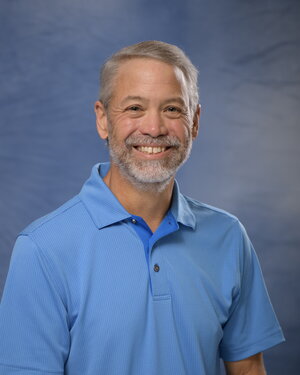
Professor Leslie Looney received the Excellence in Online Teaching award from the provost’s office. Professor Looney pioneered a new standard in online STEM education through purpose-built astronomy courses that reach thousands of students annually, transform learning and engagement at scale, and dismantle barriers to participation. He clearly communicates expectations, provides timely and constructive feedback, and actively engages students through discussion boards and announcements, resulting in high levels of student engagement and motivation.
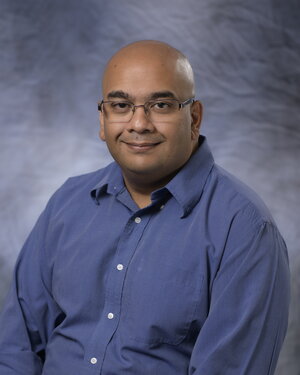
Professor Gautham Narayan was recently recognized by the College of Liberal Arts and Sciences with a Conrad Professional Scholar Award. These professorial scholar awards are funded by a gift from Arlys Conrad and are designed to support the work of exceptionally promising associate professors within the College of LAS.
Didn't receive the print version of this newsletter and want to? Contact our office!
Front Office Hours: Daily 8:00AM-4:30PM
1002 W. Green Street
Urbana, IL 61801
Phone: (217) 333-3090 | Fax: (217)-244-7638
Email: astronomy@illinois.edu