For Astronomy graduate students, spending several months working at a national laboratory can offer something difficult to find within the familiar environment of a university department: a chance to approach their research from a different perspective.For ...
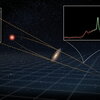
As the Nancy Grace Roman Space Telescope prepares to begin its first cycle of scientific observations, University of Illinois-Urbana-Champaign astronomers will be among the researchers using the new observatory to explore some of the biggest questions about galaxies, supermassive black holes, and...
Long before he was simulating the early universe, Illinois astronomy professor Kirk Barrow spent a summer teaching himself quantum physics from a borrowed textbook.At the time,...
PURSUE LAS is a program at the College of Liberal Arts & Sciences with the goal of expanding access to transformative undergraduate research experiences. It supports both established...
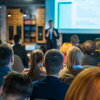
Researchers, students, and faculty gathered Friday, April 24, for Illini AstroFest, a daylong event designed to showcase astrophysics research, spark collaboration, and build community among scientists at every stage of their careers.Held at the National Center for Supercomputing Applications, the...
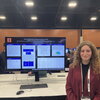
When Annie Zeng walked into her first research conference last May, she didn’t arrive with a lab group or a familiar cohort of classmates. She arrived alone, and she immediately felt like it.“I honestly felt very nervous,” said Annie, a senior pursuing a double degree in...
Scientists have been able to detect the presence of gravitational waves since 2015, when the first instruments capable of doing so were set up. However, these instruments capture many other signals as well. Sometimes these signals’ sources are easy to identify—perhaps there was a small earthquake,...
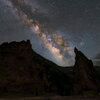
The universe is vast, but astronomers don’t have to look too far to find something genuinely new. Researchers at the Center for AstroPhysical Surveys (CAPS) used the South Pole Telescope to probe one of the most complex regions of the sky, the crowded...